For many RV enthusiasts, the hum of a campground power pedestal is the sound of convenience, promising air conditioning, hot coffee, and fully charged devices. But connecting your home-on-wheels to a power source isn't just about plugging in a cord; it's about understanding the intricate dance of RV Shore Power & 30 Amp Connections. Missteps can lead to tripped breakers, damaged appliances, or even electrical hazards. Think of it as managing your RV's energy budget – you need to know how much you have and how much you're spending.
This guide will demystify the essential knowledge you need to stay powered up safely and efficiently, focusing heavily on the workhorse 30-amp connection.
At a Glance: Your RV Shore Power Essentials
- Shore power provides alternating current (AC) directly to your RV from a campground pedestal or household outlet.
- Amperage (A) indicates the maximum current available; Voltage (V) is the electrical pressure (usually 120V AC for 15A/30A, 240V AC for 50A).
- 30-amp connections use a TT-30 plug, delivering 30 amps at 120 volts AC – enough for most single-AC unit RVs.
- Load planning is crucial: know your appliances' wattage and calculate simultaneous use to avoid tripping breakers.
- Adapters allow you to connect to different pedestal types, but never increase the available amperage. Your RV only draws what the source can provide.
- Safety first: Always use a surge protector or Energy Management System (EMS) to guard against unstable campground power.
- Monitor and manage: Keep an eye on your power consumption and prioritize high-demand appliances.
The Lifeline of Your RV: What is Shore Power?
Imagine your RV is a mini-house. Just like your home needs to be plugged into the grid for electricity, your RV, when stationary, connects to "shore power" – an external source of alternating current (AC). This power can come from a dedicated power pedestal at a campground, a standard household outlet, or even a generator.
This external power feeds your RV's internal electrical system, powering everything from your microwave to your lights, air conditioner, and outlets. Understanding how this connection works, especially with a 30-amp setup, is fundamental to a hassle-free RV experience. It prevents those frustrating moments when the power suddenly cuts out, leaving you in the dark (or worse, with a melted plug).
Decoding Campground Power: Understanding the Amperage Tiers
Campgrounds typically offer a few different service levels. These aren't just arbitrary numbers; they dictate how much electrical current your RV can safely draw. Knowing the difference is key to a smooth hookup.
The Workhorse: Your 30-Amp Connection
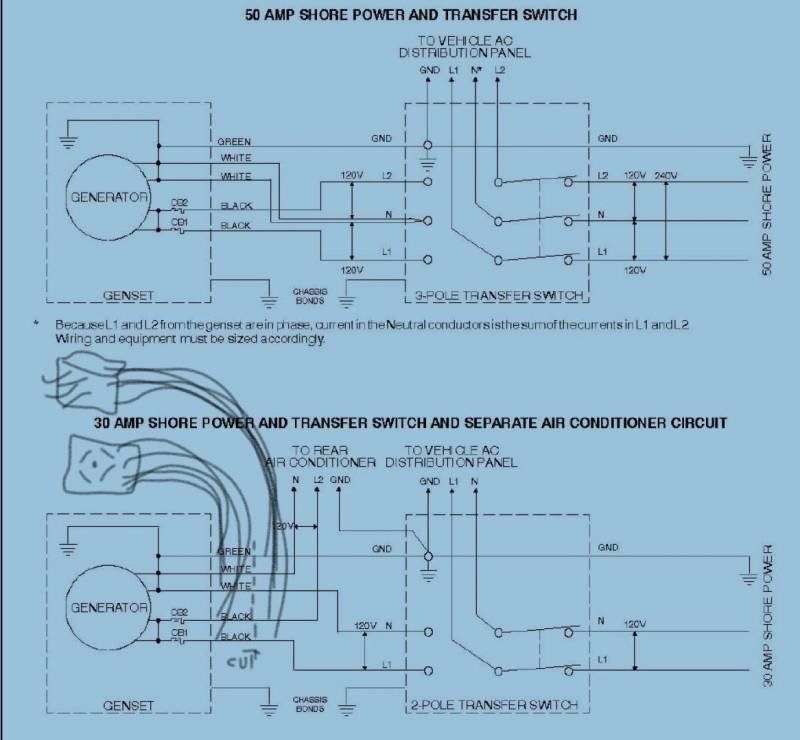
For many RVers, especially those with mid-sized travel trailers, fifth wheels, and some motorhomes, the 30-amp connection is the standard. This service delivers 30 amps at 120 volts AC, providing a respectable amount of power for your essential amenities.
- Connector Type: The iconic TT-30 connector is instantly recognizable – a three-prong plug with a specific "L" shaped blade. This design ensures it only connects to a corresponding 30-amp receptacle.
- Capacity: At 120V, a 30-amp connection provides approximately 3,600 watts of power (30 amps x 120 volts = 3600 watts). This is typically enough to run a single air conditioner, a few lights, and maybe a microwave or hair dryer, but usually not all at the same time.
- Common Use: Ideal for RVs with one air conditioning unit, standard appliances, and limited high-demand electronics. It's the most common service level you'll find at campgrounds nationwide.
Smaller Stays: The 15/20-Amp Household Outlet
Sometimes, you might be at a friend's house or a rustic campsite that only offers a standard household-style outlet. These are generally 15-amp connections, though often wired with 12-gauge conductors and protected by a 20-amp breaker, effectively providing 20 amps at 120 volts AC.
- Capacity: A 15-amp circuit provides roughly 1,800 watts (15A x 120V), while a 20-amp circuit offers about 2,400 watts. This is suitable for very light use – charging batteries, running a few lights, maybe a fan, but typically not your RV's air conditioner or microwave simultaneously.
- Safety Note: Outdoor 20-amp outlets typically require GFCI (Ground Fault Circuit Interrupter) protection, which quickly cuts power if it detects a ground fault, preventing shocks.
Big Rig Power: Stepping Up to 50 Amps
If you own a larger RV with multiple air conditioners, a residential refrigerator, or a power-hungry array of electronics, you're likely equipped for 50-amp service.
- Connector Type: This uses a NEMA 14-50 connector, a four-prong plug with two "hot" legs, a neutral, and a ground.
- Capacity: This is where things get interesting. A 50-amp service provides 50 amps at 240 volts AC. However, inside your RV, this 240V is split into two separate 120-volt hot legs. This effectively gives you 100 amps of current at 120 volts AC, for a massive total of up to 12,000 watts!
- Load Balancing: This dual-leg system allows large RVs to balance their power demands across two distinct sides of their electrical panel, preventing a single breaker from tripping under heavy load.
Mastering Your Energy Budget: Load Planning for a Smooth Trip
Regardless of whether you have 30-amp or 50-amp service, your RV has an electrical "budget." Exceeding this budget will trip a breaker, cutting power to your RV and causing a temporary inconvenience. Understanding how to plan your electrical load is a fundamental skill for every RVer.
Why Load Planning Matters
Imagine trying to pay for a $100 grocery bill with only $30 in your wallet. You're going to come up short. The same principle applies to your RV's electrical system. If your appliances try to draw more current (amps) than the shore power connection can provide, the system overloads, and the breaker trips to protect your wiring and devices from damage.
Step 1: Know Your Appliance Wattage
The first step to effective load planning is to understand how much power each of your RV's appliances consumes.
- Check Labels: Most appliances have a label on the back or bottom that lists their wattage (W) or amperage (A) rating.
- Consult Manuals: If you can't find a label, refer to your appliance manuals or do a quick online search for the specific model.
- Common Wattage Examples (Approximate):
- Air Conditioner: 1,200 – 1,800 W (per unit)
- Microwave: 600 – 1,500 W
- Coffee Maker: 800 – 1,500 W
- Hair Dryer: 1,200 – 1,800 W
- Electric Water Heater Element: 1,000 – 1,500 W
- Refrigerator (AC mode): 200 – 600 W
- TV: 50 – 200 W
- Converter (charging batteries): 200 – 800 W (depending on battery charge level)
Step 2: Amp to Watt Conversions Made Easy
Sometimes, an appliance will only list its amperage. No problem! You can easily convert amps to watts using a simple formula:
Amps (A) x Volts (V) = Watts (W)
Since most RV appliances run on 120V AC (for 15A/30A systems), you'll typically multiply the amp rating by 120.
Example: A fan rated at 1.5 amps would consume 1.5A x 120V = 180 watts.
Step 3: Calculate Your Simultaneous Load
This is where the rubber meets the road. Add up the wattage of all the devices you plan to run at the same time.
Example for a 30-amp RV (3,600-watt capacity):
- Air Conditioner: 1,500 W
- Refrigerator (AC mode): 300 W
- TV: 100 W
- Lights: 200 W
- Total if running simultaneously: 2,100 W
In this scenario, you'd still have approximately 1,500 watts of headroom (3,600 W - 2,100 W = 1,500 W). This means you could potentially run a coffee maker (1,000 W) for a short period, but adding a microwave (1,200 W) would likely push you over the 3,600 W limit, tripping the breaker.
This example illustrates why you often have to make choices, like turning off the AC for a few minutes while you heat something in the microwave.
Connecting with Confidence: Cords, Plugs, and Adapters
Connecting your RV to shore power involves more than just finding the right plug shape. It's about safety, understanding limitations, and making smart choices with adapters.
The Golden Rule: Match Your Connection
Always use the correct power cord type for your RV and aim to match it to the pedestal's rating. This ensures your RV's internal electrical system is designed to handle the incoming power and helps prevent overheating or damage. Using an undersized cord for an oversized service (e.g., a 30-amp cord on a 50-amp service without an appropriate adapter) can be extremely dangerous.
Dogbones & Adapters: Bridging the Gap (But Not Increasing Power)
Life on the road isn't always perfect, and you might encounter a campground pedestal that doesn't perfectly match your RV's plug. This is where "dogbone" adapters come in. These short, thick cords convert one plug type to another.
Crucially, adapters allow you to connect, but they do not increase the available amperage. Your RV will only ever draw what the source (the pedestal) can provide, or what your RV's main breaker is rated for, whichever is lower. Adapters simply change the physical plug shape.
Scenario 1: Your 50-Amp RV on a 30-Amp Pedestal
This is a common situation for owners of larger RVs. You'll need a "50-amp female to 30-amp male" dogbone adapter.
- How it Works: The adapter takes the single 30-amp, 120-volt AC leg from the pedestal and feeds it to both hot legs of your 50-amp RV's shore power cord.
- The Catch: Your RV now has power, but the maximum current available to your entire RV is still only 30 amps total. You've essentially downgraded your 50-amp RV to a 30-amp capacity.
- What to Do: Strict load planning is essential here. You'll likely only be able to run one air conditioner and other low-draw appliances. Forget running two ACs, the microwave, and a hair dryer all at once. Your 50-amp RV's electrical panel is now operating as a single-leg 30-amp system.
Scenario 2: Your 30-Amp RV on a 50-Amp Pedestal
Another common scenario: you have a 30-amp RV, but the only available site has a 50-amp pedestal. You'll need a "30-amp female to 50-amp male" dogbone adapter.
- How it Works: This adapter uses only one of the 50-amp outlet's 120-volt AC legs to feed the single leg of your 30-amp RV's shore power cord.
- The Catch: While the pedestal can supply much more power, your RV's master circuit breaker (rated at 30 amps) will still limit the total power draw to 30 amps.
- Benefit: You effectively have a robust, generously powered 30-amp supply. You don't gain 50-amp capacity, but you do gain peace of mind knowing the pedestal has ample overhead.
The Peril of Stacking Adapters
Resist the temptation to stack multiple adapters (e.g., a 15A to 30A adapter, then a 30A to 50A adapter).
- The Limit: When you stack adapters, the total current available will always be limited to the lowest source in the chain. So, if you're plugging into a 15-amp household outlet, no matter how many adapters you add, you're still only drawing a maximum of 15 amps.
- Safety Concerns: Stacking adapters creates more connection points, which increases resistance, the potential for loose connections, and heat buildup. This can lead to melted plugs, damaged cords, and fire hazards. It's simply not worth the risk. Always use a single, direct adapter if needed.
Guard Your Grid: Essential Power Safety & Management
Campground power can be unpredictable. Voltage fluctuations, surges, and improperly wired pedestals are not uncommon. Proactive safety and management are paramount to protect your RV and ensure a safe trip.
The Unseen Threat: Power Quality & Surges
Campground electrical systems are subject to many variables: old wiring, heavy usage, and inconsistent maintenance. This can lead to:
- Low Voltage (Brownouts): When many RVs draw power, the voltage can drop, forcing your appliances (especially ACs) to work harder, generating heat and potentially damaging motors.
- High Voltage: Less common but more immediately damaging, high voltage spikes can fry electronics.
- Surges: Sudden, brief spikes in voltage (e.g., from lightning or faulty equipment) can cause severe, irreversible damage.
- Improper Wiring: Miswired pedestals (reversed polarity, open ground/neutral) are dangerous and can shock you or damage appliances.
To combat these threats, invest in a quality Surge Protector or, even better, an Energy Management System (EMS). - Surge Protector: A basic surge protector guards against voltage spikes.
- EMS: An EMS is a more advanced device that constantly monitors incoming power for low/high voltage, improper wiring, and surges. It will automatically shut off power to your RV if unsafe conditions are detected, protecting your entire electrical system. Many will also provide a time delay before restoring power, giving sensitive electronics time to reset. This is arguably the single most important electrical accessory for any RVer.
Becoming a Power Manager: Prioritizing Appliances
Even with an EMS, you still need to actively manage your power usage, especially on 30-amp service.
- Identify Power Hogs: Know which appliances draw the most power (AC, microwave, hair dryer, electric water heater, space heater).
- Stagger Usage: Don't run multiple high-demand appliances simultaneously. For instance, if your AC is on, turn it off for a few minutes while you use the microwave or coffee maker.
- Consider Alternatives: Can you use your gas cooktop instead of the microwave? Light propane or battery-powered lanterns instead of all interior lights?
Smart Monitoring for Peace of Mind
Many modern RVs come with built-in energy management systems that display real-time power consumption. If yours doesn't, consider an external power monitor.
- Real-time Insights: These devices plug in line with your shore power cord and display current draw (amps), voltage, and wattage, helping you understand your usage patterns and avoid overloading.
- Preventive Measures: Seeing your amp draw creep towards your limit gives you a chance to turn off a non-essential appliance before a breaker trips.
Lighten the Load: Leveraging Propane & Efficiency
Your RV often has appliances that can run on multiple energy sources. Use this to your advantage to reduce your electrical load.
- Propane Water Heater: If your water heater has an electric and propane option, use propane to heat water when connected to 30-amp shore power. This significantly reduces electrical draw.
- Propane Refrigerator: While often less efficient on propane, switching your absorption refrigerator to propane mode can free up hundreds of watts on your electrical budget.
- LED Lighting: If you haven't already, upgrade all your RV's incandescent bulbs to LEDs. They draw a fraction of the power and reduce heat.
The Pre-Flight Check: Verifying Adapter Wiring
If you acquire a new adapter, or if you ever suspect an issue, it's wise to verify its proper wiring.
- Use a Multimeter: A simple multimeter can confirm continuity and ensure the hot, neutral, and ground wires are correctly mapped from one end of the adapter to the other.
- Pedestal Testers: Always use a simple plug-in pedestal tester (often called a "surge guard") before connecting your RV. These inexpensive devices quickly indicate if the pedestal is wired correctly (correct polarity, ground present).
Common Questions & Misconceptions About RV Shore Power
Let's tackle some frequently asked questions and clear up a few common misunderstandings.
Can I run everything at once on 30 amps?
Answer: Highly unlikely. While 30 amps offers a decent amount of power, it’s rarely enough for all your high-draw appliances to run simultaneously. You'll almost certainly trip a breaker if you try to run your air conditioner, microwave, electric water heater, and a hair dryer all at the same time. Load planning and staggered use are crucial.
Will an adapter boost my power?
Answer: Absolutely not. This is one of the most persistent misconceptions. An adapter simply changes the physical shape of the plug so you can connect to a different receptacle. The power available to your RV will always be limited by the lowest capacity of the pedestal, your RV's main breaker, or any inline adapter. You can't magically get 50 amps from a 30-amp pedestal with an adapter.
Is my RV's GFCI outlet enough protection?
Answer: Your RV's GFCI outlets are excellent for protecting against ground faults at those specific receptacles, preventing electrical shock from faulty devices or wet conditions. However, a GFCI outlet does not protect your entire RV's electrical system from low voltage, high voltage, or power surges coming from the pedestal. For comprehensive protection, an external surge protector or EMS is essential.
What's the difference between a 30-amp shore power cord and a 30 amp generator plug?
Answer: While both might handle 30 amps at 120 volts, their connectors are typically different. A standard RV 30-amp shore power cord uses the TT-30 connector. A 30-amp generator plug, especially on portable units, often uses a L5-30P twist-lock connector for a more secure connection in a vibrating environment. While adapters exist to convert between them, it's important to recognize that they are not interchangeable by default.
Empowering Your Next Adventure: Staying Plugged In Safely
Navigating the world of RV shore power and 30-amp connections doesn't have to be intimidating. By understanding the basics of amperage, practicing smart load planning, making informed choices about adapters, and prioritizing robust safety measures like an EMS, you transform potential headaches into smooth sailing.
You're now equipped with the knowledge to approach any power pedestal with confidence, ensuring your RV remains a comfortable, safe, and powered haven, wherever your travels take you. So, plug in, plan smart, and enjoy the journey!