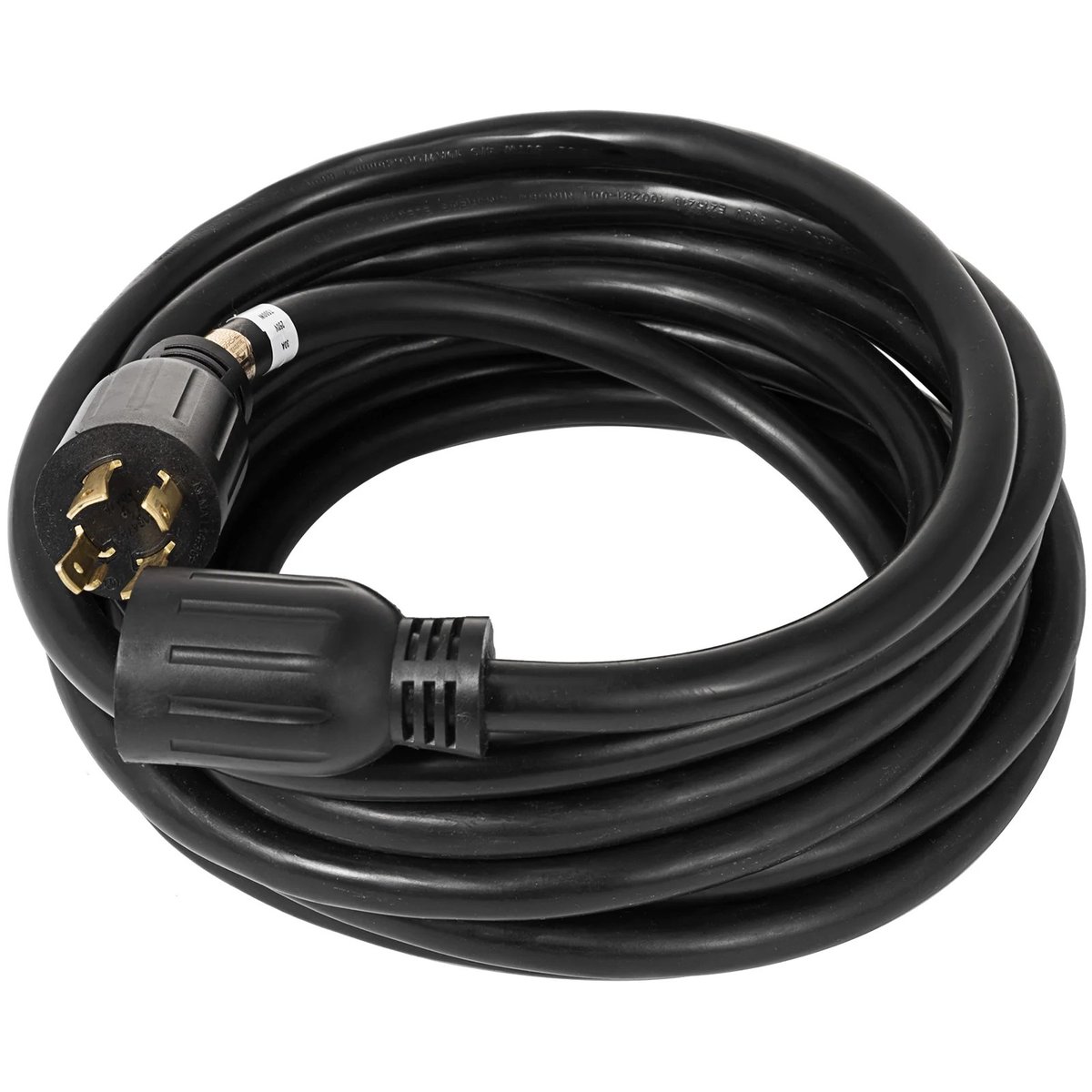
Generators are incredible tools, providing a lifeline of power when the grid goes dark or you're miles from civilization. But connecting your generator to your home, RV, or essential tools isn't as simple as plugging in a lamp. You need to speak the language of electricity, and for many versatile setups, that conversation often revolves around the various Types of 30 Amp Generator Plugs & Receptacles. Understanding these crucial connection points isn't just about getting power; it's about doing so safely, efficiently, and without frying your equipment or creating hazardous situations.
From the twist-lock connectors found on job sites to the RV-specific sockets you see at campgrounds, 30-amp connections are a backbone for a wide range of portable power applications. Ignoring the specifics can lead to frustration, damaged appliances, or worse. Let's demystify these connections, empowering you to make smart, safe choices for your generator setup.
At a Glance: Key Takeaways for Generator Plugs & Receptacles
- NEMA Standards Rule: In North America, AC plugs and receptacles adhere to National Electrical Manufacturers Association (NEMA) standards, which dictate their design based on voltage, amperage, and other electrical characteristics.
- 30-Amp Focus: Many generators offer 30-amp outlets, ideal for RVs, smaller home backup systems, and various heavy-duty tools.
- Two Main Voltage Types: 30-amp receptacles come in 120-volt (NEMA 5 series) and 120/240-volt (NEMA 14 series) configurations.
- Twist-Lock vs. Straight Blade: Twist-lock (indicated by 'L' in NEMA codes) offers a more secure connection, ideal for vibration-prone environments. Straight blade options are common for RVs (TT-30R) and standard household use.
- DC & Specialty Outlets: Beyond AC, generators may feature 12V DC outlets, USB ports, parallel ports for linking inverter generators, and proprietary connections.
- Safety First: Always check for GFCI protection, weather resistance, and integrated circuit breakers to ensure safe operation.
- Adapters Have Limits: While useful, adapters should only be used when they match voltage and amperage correctly, and never as a workaround for fundamental electrical incompatibilities.
The Power Connection Puzzle: Why Understanding Plugs Matters
Imagine you've got a generator humming, ready to bring light back to your home, but your extension cord just doesn't fit the outlet. Or perhaps you're setting up your RV at a campsite, and the shore power connection looks nothing like your generator's plug. This isn't just an inconvenience; it's a fundamental misunderstanding of electrical compatibility, and it can lead to dangerous situations or expensive damage.
Every plug and receptacle, especially for a powerful device like a generator, has a specific job. Its design—the number, shape, and arrangement of its prongs—is a language that tells you about the power it can safely deliver. This intricate system prevents you from plugging a high-voltage appliance into a low-voltage source, or an appliance drawing too much current into an inadequately rated outlet. It’s all about safety, efficiency, and preventing accidental overloads or electrocution.
Decoding NEMA: Your Guide to Generator Outlet Labels
In North America, the NEMA (National Electrical Manufacturers Association) system is the universal standard for AC electrical connectors. Think of NEMA as the Rosetta Stone for understanding generator plugs and receptacles. Each NEMA designation is a concise code that tells you critical information:
- First Identifier ('L'): If you see an 'L' at the beginning, it signifies a twist-lock mechanism. This means you insert the plug and twist it to lock it securely in place, preventing accidental disconnection—a huge plus for generators that might be vibrating or in high-traffic areas. No 'L' means it's a standard straight-blade connection.
- Second Identifier (Numbers like '5', '14', 'TT'): This crucial part tells you about the connector's voltage, grounding configuration, number of poles (hot wires), and wires in total. For portable generators, NEMA 5 (120V) and NEMA 14 (120/240V) are the most common. The "TT" in TT-30R is a special designation for travel trailers.
- Third Identifier (Amperage): This numerical value indicates the maximum current (in amps) the connector is rated for. Our focus today is on '30', signifying 30 amps.
- Fourth Identifier ('P' or 'R'): 'P' stands for plug (the male end, typically on your cord), and 'R' stands for receptacle (the female end, found on the generator or wall).
So, a label like "NEMA L14-30R" instantly tells an expert that it's a twist-lock, 120/240-volt, 30-amp receptacle. Knowing this code empowers you to understand your generator's capabilities and match it correctly to your power needs. For a deeper dive into the broader landscape of these connectors, you might find it helpful to explore Understanding 30 amp generator plugs.
The Main Event: 30 Amp AC Generator Receptacles
When we talk about 30 amp generator plugs and receptacles, we're primarily looking at two main families: the 120-volt NEMA 5 series and the 120/240-volt NEMA 14 series. Each serves distinct purposes, primarily dictated by the voltage and total wattage required.
120-Volt Options (NEMA 5 Series)
These receptacles are designed for single-phase 120-volt power, providing a substantial amount of wattage for various applications. They feature three wires: one hot, one neutral, and one ground.
- NEMA L5-30R: The Twist-Lock Workhorse (120V/30A)
- Configuration: 3-prong, with a curved blade that locks into place when twisted.
- Power Output: Provides up to 3600 watts (120 V x 30 A).
- Common Uses: This is a very popular outlet for transfer switch connections (especially with interlock kits or manual transfer switches for basic home backup), powering travel trailers, and connecting larger campers. Its twist-lock feature makes it ideal for situations where a secure connection is paramount, like on a vibrating generator or in an environment where cords might be accidentally tugged. You'll often see this used for generators feeding into a smaller subpanel or a designated RV inlet box.
- Practical Tip: If your generator has an L5-30R, you'll need a power cord with an L5-30P plug on one end and the appropriate connector for your application (e.g., a male plug for a transfer switch, or an RV-style plug).
- NEMA TT-30R: The RV-Ready Standard (120V/30A)
- Configuration: 3-prong, straight blade design, but distinct from a standard household plug. One blade is L-shaped.
- Power Output: Also provides up to 3600 watts (120 V x 30 A).
- Common Uses: This is the standard for RVs and travel trailers. If your generator boasts being "RV Ready," it almost certainly features a TT-30R receptacle. It allows direct connection to an RV's electrical system, powering all its 120-volt appliances like air conditioners, microwaves, and outlets.
- Key Difference from L5-30R: While both deliver 120V/30A, the TT-30R is a straight-blade design, specifically shaped for RVs. The L5-30R is a twist-lock. They are not directly compatible without an adapter.
- Adaptability: NEMA L5-30, 5-30, and TT-30 connectors can be interfaced using suitable, properly rated adapters. For example, an RV owner with a TT-30P shore power cord might use an adapter to connect to a generator's L5-30R outlet.
120/240-Volt Options (NEMA 14 Series)
These receptacles are the heavy-hitters, providing both 120-volt and 240-volt power simultaneously from a single outlet. They feature four wires: two hot, one neutral, and one ground. This dual-voltage capability makes them essential for powering larger homes, workshops with 240-volt tools, or appliances like electric ranges and dryers.
- NEMA L14-30R: The Dual-Voltage Powerhouse (120/240V/30A)
- Configuration: 4-prong, twist-lock design.
- Power Output: Provides up to 7200 watts (240 V x 30 A). It can deliver 120V power from each of its two hot lines, or 240V power between them.
- Common Uses: This is arguably the most common and versatile 30-amp outlet for home backup generators. It's frequently used to connect a generator to a manual transfer switch or a generator inlet box, which then routes power into your home's main electrical panel. This allows you to power a mix of both 120-volt and 240-volt circuits in your house. It's also suitable for larger 240-volt appliances.
- Why it's Crucial: If you intend to power your home's well pump, central AC, or electric water heater (which often run on 240V), an L14-30R is usually your go-to generator connection.
- Adaptability: L14-30R connectors can be interfaced with non-twist-locked counterparts (like a very rare 14-30R straight blade) using an appropriate adapter, but the twist-lock version is overwhelmingly dominant for generators.
- NEMA L14-20R (120/240V/20A):
- Configuration: 4-prong, twist-lock design, but with a different prong configuration than the L14-30R.
- Power Output: Provides up to 4800 watts (240 V x 20 A).
- Common Uses: While a 20-amp dual-voltage twist-lock, this receptacle is rarely encountered on portable generators. Most manufacturers opt for the higher 30-amp L14-30R to provide more robust 240V capacity. If you do see it, it would serve similar purposes to the L14-30R but with lower power limits.
Beyond 30 Amps: Other Common Generator Outlets
While our focus is on 30-amp connections, it's helpful to understand other common generator receptacles to provide context and ensure you don't confuse them with their 30-amp cousins.
- NEMA 5-20R: Your Standard Household Outlet (120V/20A)
- Configuration: Typically a duplex (two outlets sharing one circuit breaker), 3-prong straight blade. One prong might be horizontal for 20A.
- Power Output: Up to 2400 watts.
- Common Uses: These are your everyday wall outlets. Generators usually have several 5-20R outlets to power standard 120V appliances, tools, and lights. Often, these are GFCI protected.
- NEMA 14-50R: For Heavy-Duty Needs (120/240V/50A)
- Configuration: 4-prong straight blade.
- Power Output: A whopping 12,000 watts (240 V x 50 A).
- Common Uses: This is for very large loads—think electric cooking ranges, charging electric vehicles, or powering massive RVs. Larger home standby generators often feature a 14-50R or a similar L14-50R twist-lock. While a powerful option, it's typically found on larger, more robust portable generators or home standby units.
- NEMA SS2-50R: The Shore Power Connection (120/240V/50A)
- Configuration: 4-prong twist-lock, distinct from the L14-50R.
- Power Output: 12,000 watts.
- Common Uses: Primarily used for connecting boats to shore power at marinas. While not typically on portable generators themselves, you might need an adapter if you're trying to use a large generator to power a boat that relies on this specific connection. It is adaptable to NEMA 14-50 connectors.
Twist-Lock vs. Straight Blade: Why the Difference?
The distinction between twist-lock (L-type) and straight-blade receptacles isn't just aesthetic; it's a functional choice with safety implications.
- Twist-Lock (e.g., L5-30R, L14-30R): These connectors are designed to prevent accidental disconnection. You insert the plug, then twist it to engage a locking mechanism. This makes them ideal for environments where vibration is common (like a running generator) or where a secure connection is critical for safety and continuous power delivery, such as feeding power to a home transfer switch or on a construction site.
- Straight Blade (e.g., TT-30R, 5-20R, 14-50R): These are simple push-in connections. While convenient for quick connections and disconnections, they can pull out if snagged or if the generator vibrates excessively. The TT-30R for RVs is a straight blade, but its unique blade shape helps ensure it’s not confused with other common household plugs.
When choosing generator cords or adapters, always prioritize twist-lock connections for critical applications like home backup, as they offer superior security.
The DC Side: When NEMA Doesn't Apply
NEMA standards apply exclusively to AC outlets. Portable generators, particularly inverter models, increasingly offer DC (Direct Current) outputs that follow entirely different, often manufacturer-specific, conventions.
- 12V DC Receptacles: For Smaller Electronics & Battery Charging
- Variety: These come in many forms: flat "cigarette lighter" style, cylindrical barrel plugs, or even traditional binding posts for battery cables.
- Common Uses: Ideal for charging 12V batteries (e.g., car, marine, RV), powering small 12V DC appliances, or running specific automotive accessories like air compressors or spotlights.
- Important Note: The design (pin configuration, length, diameter) and supplied current can vary wildly. Always consult your generator's user manual and the specifications of your 12V device to ensure compatibility. Plugging in the wrong device or one that draws too much current can cause damage.
- USB Ports: Modern Convenience (and their nuances)
- Voltage: Typically 5 V.
- Common Uses: Charging smartphones, tablets, portable speakers, and other USB-powered gadgets.
- Ampage Matters: Not all USB ports are created equal. Some provide 1.0 A, while others offer 2.1 A or more (e.g., USB-C, Quick Charge ports). A lower amperage port will charge a modern smartphone much slower, or might not be able to charge a tablet effectively. Always check the port's rated output and your device's charging requirements.
Specialty Connections & Expanding Your Generator's Reach
Beyond the standard AC and DC outlets, some generators offer specialized connections that enhance their versatility or integrate them into specific systems.
- Parallel Ports: Doubling Down on Inverter Power
- Found On: Primarily inverter generators.
- Purpose: These unique ports (often proprietary in design) allow you to link two or more compatible inverter generators together to combine their power output. For example, two 2000-watt inverter generators might produce 3500-4000 watts when paralleled.
- How it Works: You typically need a special "parallel kit" (often sold separately) that plugs into these ports and provides an additional, higher-amperage outlet. This is a fantastic feature for those who need more power than a single inverter can provide but still want the fuel efficiency and quiet operation of inverter technology.
- Proprietary Outlets: Manufacturer-Specific Solutions
- Purpose: Some generators, especially home backup models or those designed for very specific tasks, might have proprietary outlets.
- Examples: A welding generator might have a unique receptacle for its welding equipment, or a large home standby generator could have a specialized connector for a manufacturer-branded automatic transfer switch. Always refer to the manufacturer's documentation for these unique connections.
Safety First: Essential Receptacle Protections
Understanding the types of plugs and receptacles is only half the battle; knowing about the safety features integrated into your generator's outlets is equally crucial. These protections are designed to prevent electrical shocks, fires, and equipment damage.
- GFCI Receptacles: Your Lifesaving Breaker
- What it Is: GFCI stands for Ground Fault Circuit Interrupter. These outlets are designed to protect against ground faults, which occur when electricity takes an unintended path (e.g., through water, or a person).
- How it Works: A GFCI constantly monitors the current flowing in a circuit. If it detects even a tiny imbalance (indicating current is leaking out somewhere it shouldn't be), it trips and cuts power almost instantly (within milliseconds), preventing serious injury or electrocution.
- Identification: GFCI receptacles have distinctive "Test" and "Reset" buttons.
- Maintenance: Always test your GFCI outlets regularly (monthly is a good habit) by pressing the "Test" button. The power should cut off. Press "Reset" to restore power. If it doesn't trip, the GFCI might be faulty and needs replacement.
- Weather-Resistant Receptacles: Built for the Elements
- What it Is: These outlets are constructed with durable materials designed to withstand exposure to UV light, extreme temperatures, and moisture without degrading.
- Identification: They are often marked with "WR" letters or come equipped with robust, self-closing covers (like rubber or spring-loaded flaps).
- Importance: For any outdoor generator use, weather-resistant receptacles (or at minimum, proper weatherproof covers for standard outlets) are mandated by electrical codes (like the National Electrical Code since 2008 for outdoor/damp/wet locations) to prevent water intrusion, short circuits, and corrosion.
- Understanding Circuit Breakers: Guarding Against Overload
- What it Is: Circuit breakers are electrical safety devices designed to protect an electrical circuit from damage caused by overcurrent or short circuits.
- How it Works: If the electrical load connected to an outlet (or a group of outlets) exceeds its rated amperage, the circuit breaker automatically "trips," interrupting the flow of electricity to prevent overheating of wires, potential fires, and damage to the generator or connected appliances.
- Placement: Most generators have individual circuit breakers for each high-amperage receptacle (like L14-30R). Standard 5-20R duplex outlets usually share a single breaker.
- Important: Even if a receptacle (like an L14-30R) has a theoretical capacity of 7200 watts, a smaller generator might have a main circuit breaker that limits the total output, or the individual breaker for that specific outlet might be rated lower than the receptacle's maximum. Always respect the lowest rated component in the system.
Adapters & Converters: Bridging the Gap (with Caution)
Adapters can be incredibly useful tools for increasing the versatility of your generator. They allow you to connect a cord with one type of plug to a generator receptacle of a different type (e.g., connecting an RV's TT-30P cord to a generator's L5-30R outlet). However, they must be used correctly and with extreme caution.
- When and How to Use Them Safely:
- Match Voltage & Amperage: The adapter must correctly convert the plug type without changing the voltage or exceeding the amperage rating of either the generator outlet or the connected appliance.
- Reputable Brands: Always purchase adapters from reputable manufacturers. Cheap, poorly constructed adapters can be fire hazards.
- Temporary Use: Adapters are generally meant for temporary connections, not permanent installations.
- Examples: Using a "dog bone" adapter to convert an L14-30P to a 14-50P (if your generator is rated for 50A) or a TT-30P to an L5-30P.
- The Dangers of Misusing Adapters:
- Voltage Mismatch: Never use an adapter to connect a 120V appliance to a 240V outlet, or vice versa, unless the adapter is specifically designed as a transformer/converter, which is rare for generator cords. You'll destroy your appliance.
- Amperage Overload: Do not use an adapter to draw more amperage than the generator outlet or the adapter itself is rated for. For example, plugging a 50A cord into a 30A outlet (even with an adapter) means you can still only safely draw 30A. The adapter doesn't magically increase the generator's capacity.
- "Cheater" Cords: Avoid any adapter that bypasses grounding or neutral connections. These are extremely dangerous and can lead to electrocution.
- Modifying Plugs: Never cut off grounding prongs or modify plugs to force them into incompatible receptacles. This defeats critical safety mechanisms.
Choosing the Right Plug & Receptacle for Your Needs
Selecting the correct generator, and therefore the correct combination of plugs and receptacles, boils down to a few key considerations.
- Match Your Generator to Your Load:
- 120V Loads Only? If you only plan to power standard household items, an RV, or smaller tools, then generators with L5-30R or TT-30R outlets (for 30A) will suffice.
- Need 240V for Home Backup? If you want to power larger appliances like a well pump, central air conditioning, or an electric water heater, you'll absolutely need a generator with a 120/240V outlet, typically an L14-30R.
- Consider Your Application:
- RV & Camping: A generator with a TT-30R is usually "RV Ready" and the most convenient choice.
- Home Backup: An L14-30R is the standard for connecting to a home's transfer switch or inlet box for whole-house or critical circuit backup. An L5-30R might suffice for very limited, 120V-only home backup.
- Job Site/Construction: Twist-lock connections (L5-30R, L14-30R) are preferred for their secure connection, preventing accidental disconnections in busy or vibrating environments.
- Future-Proofing Your Setup:
- Even if you don't need 240V now, consider if you might in the future. A generator with an L14-30R offers more versatility.
- Think about the total wattage you'll need. A 30-amp circuit provides a good balance for many applications (3600W at 120V, or 7200W at 240V). If you anticipate needing significantly more, you might need to look at generators with 50-amp outlets (like a 14-50R) and adjust your budget accordingly.
FAQs / Common Misconceptions
Let's tackle some quick questions often asked about 30 amp generator plugs.
Q: Can I plug any 30 amp cord into any 30 amp outlet?
A: No, absolutely not. As we've seen, there are distinct types of 30 amp outlets (L5-30R, TT-30R, L14-30R) with different voltages (120V vs. 120/240V) and prong configurations (twist-lock vs. straight blade). A 30-amp cord must have a plug that physically matches the receptacle and is rated for the correct voltage.
Q: Are all 30 amp plugs the same?
A: No. While they all handle 30 amps of current, their physical shapes and the voltage they deliver are different. For example, a TT-30 plug is 120V and straight-blade, while an L14-30 plug is 120/240V and twist-lock. You cannot interchange them without a specialized, correctly rated adapter, and even then, you must be careful about voltage compatibility.
Q: What's the difference between 120V 30A and 240V 30A?
A: The primary difference is the voltage and thus the total power (wattage) they can deliver.
- 120V 30A (e.g., L5-30R, TT-30R): Provides 3600 watts of power (120V x 30A). This is suitable for single-phase 120-volt appliances and RVs.
- 240V 30A (e.g., L14-30R): Provides 7200 watts of power (240V x 30A). This circuit provides two 120V hot lines, allowing for both 120V and 240V appliances to be powered. It's used for larger, higher-draw appliances like well pumps or specific tools, and for home backup.
Final Word: Powering Up Smartly
Understanding the various types of 30 amp generator plugs and receptacles isn't just technical jargon; it's a fundamental aspect of safe, efficient, and versatile generator use. Whether you're powering your RV, backing up your home, or running tools on a job site, correctly matching your plugs and receptacles ensures that your power flows reliably and without incident.
Always take the time to inspect your generator's outlets, read your manuals, and identify the specific NEMA codes. Invest in high-quality cords and, if necessary, properly rated adapters from reputable brands. A little knowledge and foresight in this area will save you from frustration, potential hazards, and costly mistakes, allowing you to harness the full potential of your portable power source with confidence. Stay safe and stay powered!